Tuesday, November 6, 2012

Annotated Resources: Copyright and Plagiarism

Resource Page!
Click here!
Ask the Judge for resources on Copyright and Plagiarism!

Saturday, November 3, 2012

Common Core State Standards mapped to the Information Fluency Model


The Common Core State Standards provide a framework for teaching information fluency in Grades 3 through 12. To help educators in this task, relevant information fluency competencies are mapped to the appropriate standards.


Thursday, October 25, 2012

Who is the Author?

Check out the new version of our online tutorial game: Who is the Author?

Try this interactive game based tutorial to improve your investigative search skills. (Requires Flash). This is one of near 100 free online games we offer to help you teach Information Fluency skills.


Who is the Publisher?

We have just revised our popular online game: Who is the Publisher?

Practice the techniques of investigative search in this novel and entertaining tutorial. (Requires Flash).


Sunday, August 19, 2012

Howard Rheingold Interview: "Getting Net Smart"


How Did Howard Rheingold Get So “Net Smart”: An Interview (Part One) http://henryjenkins.org/2012/08/how-did-howard-rheingold-get-so-net-smart-an-interview-part-one.html


How Did Howard Rheingold Get So “Net Smart”?: An Interview (Part Two) http://henryjenkins.org/2012/08/how-did-howard-rheingold-get-so-net-smart-an-interview-part-two.html


How Did Howard Rheingold Get So “Net Smart”?: An Interview (Part Three) http://henryjenkins.org/2012/08/how-did-howard-rheingold-get-so-net-smart-an-interview-part-three.html 


From a great blog by Henry Jenkins:  Confessions of an Aca-Fan


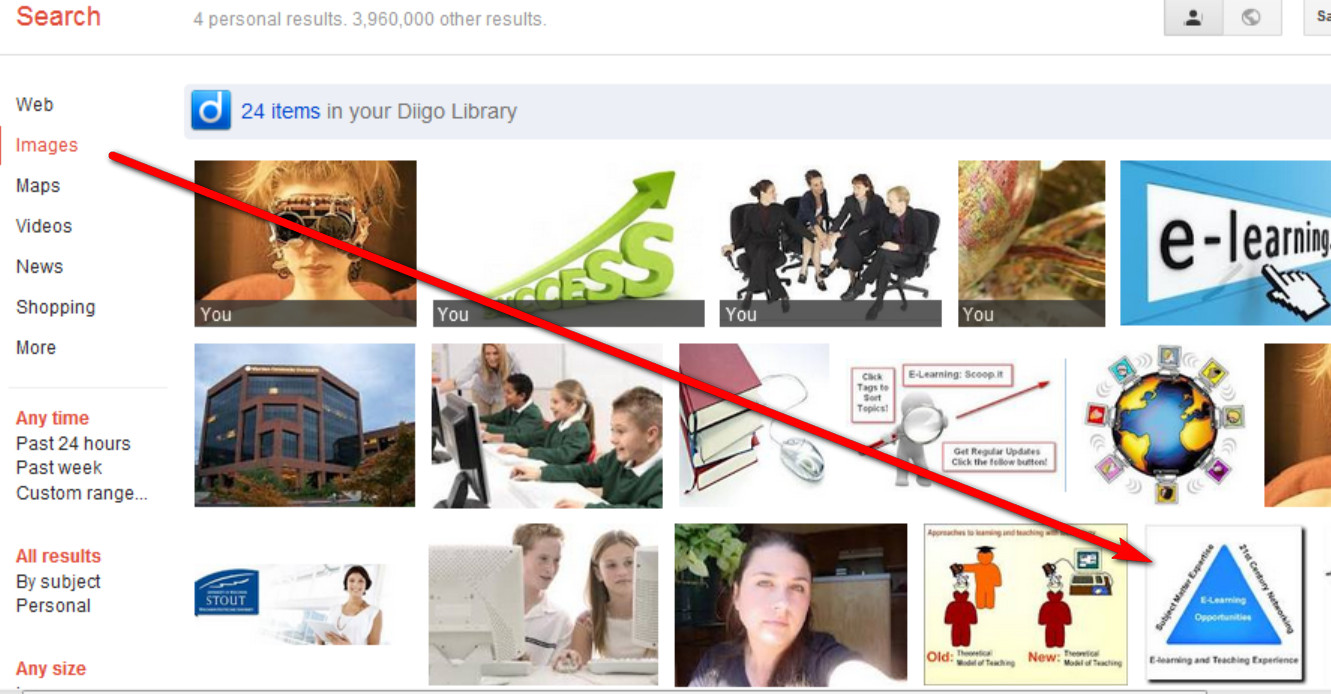
Image search for information discovery


Lately I've experimented with image search engines as a way to find interesting written information. The process is simple.

1. Query the search engine about your topic of choice.


2. Instead of clicking through to the website returns, click on Images.


3. Scan the images for pictures or diagrams that capture your concept. 


4. Click on the image.


5. Click on the website for the image


6. Evaluate the results


When you change the way your search, you change what you find.  This opens your mind to new possibilities for serendipity and new paths to information discovery! ~ Dennis

Why we do, what we do.

A quote by James Madison that is carved into marble at the Library of Congress:

 “A popular Government, without popular information, or the means of acquiring it, is but a Prologue to a Farce or a Tragedy; or, perhaps both. 

Knowledge will forever govern ignorance: And a people who mean to be their own Governors, must arm themselves with the power which knowledge gives.”

James Madison, letter to William T. Barry, August 4, 1822


Quotation discovered in: How Did Howard Rheingold Get So “Net Smart”: An Interview (Part One) http://henryjenkins.org/2012/08/how-did-howard-rheingold-get-so-net-smart-an-interview-part-one.html


Howard Rheingold:

"The answer to any question is available anywhere within a second or too — but it’s up to the inquirer to evaluate the validity of the answer. Virtual communities, smart mobs, collective intelligence, social production, enable millions of people to do things together in the physical world that they were never before able to do. Tech-savvy teenagers invent billion dollar industries and new ways of seeking information and socializing. Others organize revolutions. Know-how is at the core of all these new phenomena, whether they are used for good or ill. So digital literacies of attention, crap detection, participation, collaboration, and network smarts constitute a critical uncertainty. The answer to “is this stuff any good for us” is, I strongly believe: “It depends on what people know, and how many of them know it.” Just as the decades after Gutenberg’s invention saw the expansion of the literate population from thousands to millions, we’re seeing the diffusion of new literacies that are already changing the world more profoundly than print did in its first decades."

How Did Howard Rheingold Get So “Net Smart”: An Interview (Part One) http://henryjenkins.org/2012/08/how-did-howard-rheingold-get-so-net-smart-an-interview-part-one.html

Tuesday, July 24, 2012

Tuesday, July 17, 2012

Make your own Mobile Apps? Use a 'Curated Search Field' for better results


Here are articles tagged 'app making' found on the Scoop.it curation system.   

http://www.scoop.it/search?q=app+making&x=8&y=10

Using Scoop.it as your search field is a handy way to search a large number of curated articles.  Since the articles are selected by individual 'experts' you tend to get a better set of initial results than you might find with a Google or Bing search. ~ Dennis

Joyce Valenza: MentorMob tutorial on Credibility


Create your own Playlist on MentorMob!

For more on Joyce's thinking about MentorMob see:

MentorMob and me


Posted by joycevalenza on July 15th, 2012


(Learning hint of of the month:  When Joyce Valenza talks, LISTEN!)


~ Dennis